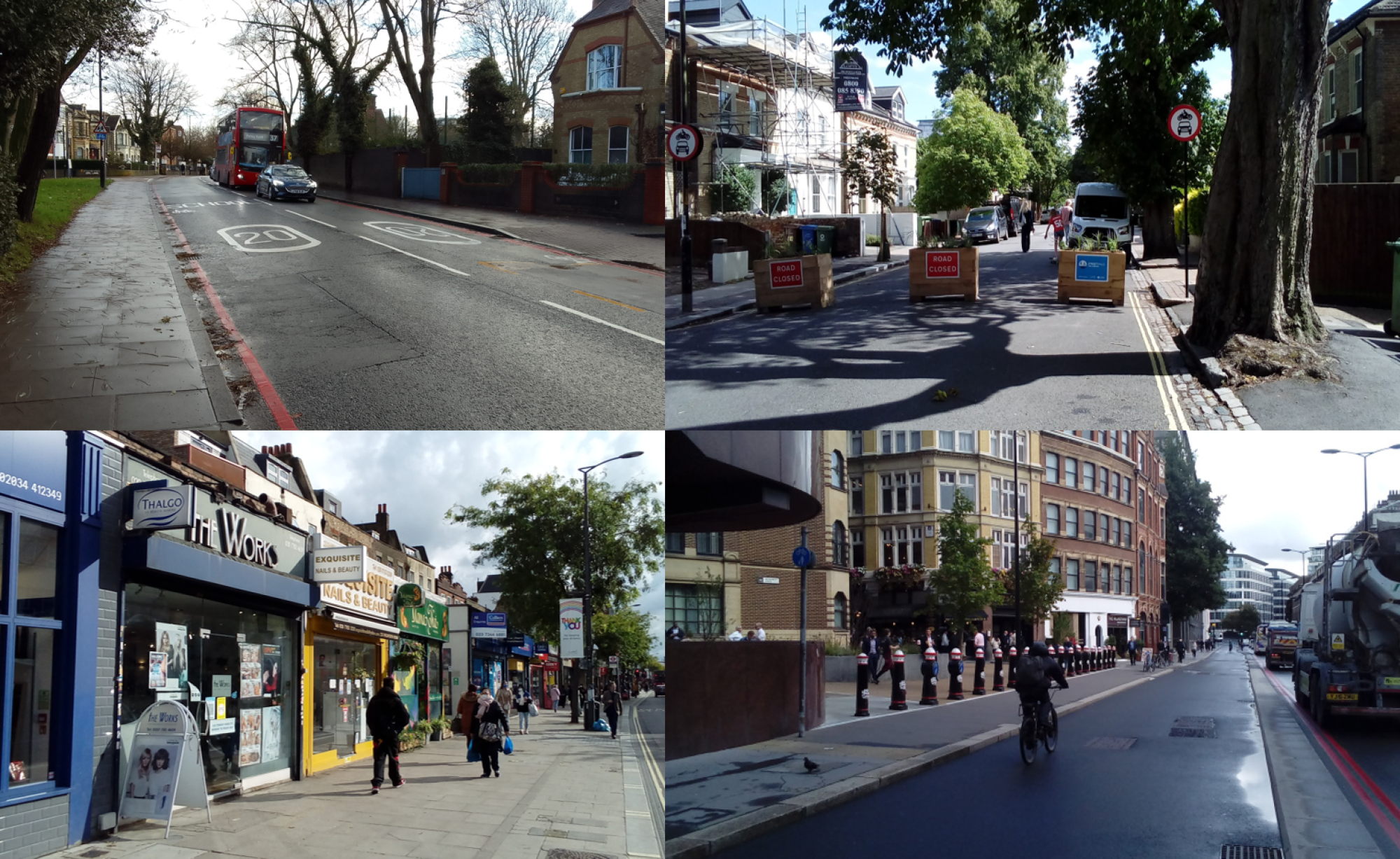

Action Vision Zero campaigns for road safety programmes to be based on road danger reduction. This means caring about the other harms caused by motor vehicles, in addition to how many people are killed and seriously injured in crashes.
Road danger reduction is concerned about the harm posed by both the unsafe and excessive use of motor vehicles. Road safety has traditionally only focused on the unsafe use.
Action Vision Zero helps communities campaign for safe roads and streets where people want to walk, cycle and spend time. Achieving a vision of zero fatal and serious road casualties is entirely possible in the long term, but requires a rethink of the balance between people and motor vehicles. This is critical, not just for our safety, but for social justice, increasing physical activity, reducing air pollution and slashing carbon emissions.
This differs from the Vision Zero approach adopted by many countries, cities and international organisations.
The Vision Zero concept, pioneered by Sweden in 1997, challenges the inevitability of road danger and puts human health at the centre of how we design and manage our roads and streets. It has since been adopted by cities including London, New York, San Francisco, Chicago, Paris, Berlin and Stockholm.
While it is easy to set Vision Zero ambitions, it has been much harder to deliver sustained results. Initial sharp declines in road fatalities following the introduction of Vision Zero policies in Sweden and New York have levelled off in recent years.
Action Vision Zero helps to take the concept to the next level in Britain. This is by providing evidence, proven policy ideas and one-to-one support to communities, campaigners and elected representatives.
We offer a wide range of resources and one-to-one help that is available free of charge. Please contact Jeremy, Amy and Victoria from Action Vision Zero here.
Action Vision Zero is supported with funding from the Foundation for Integrated Transport.

 actionvisionzero.org