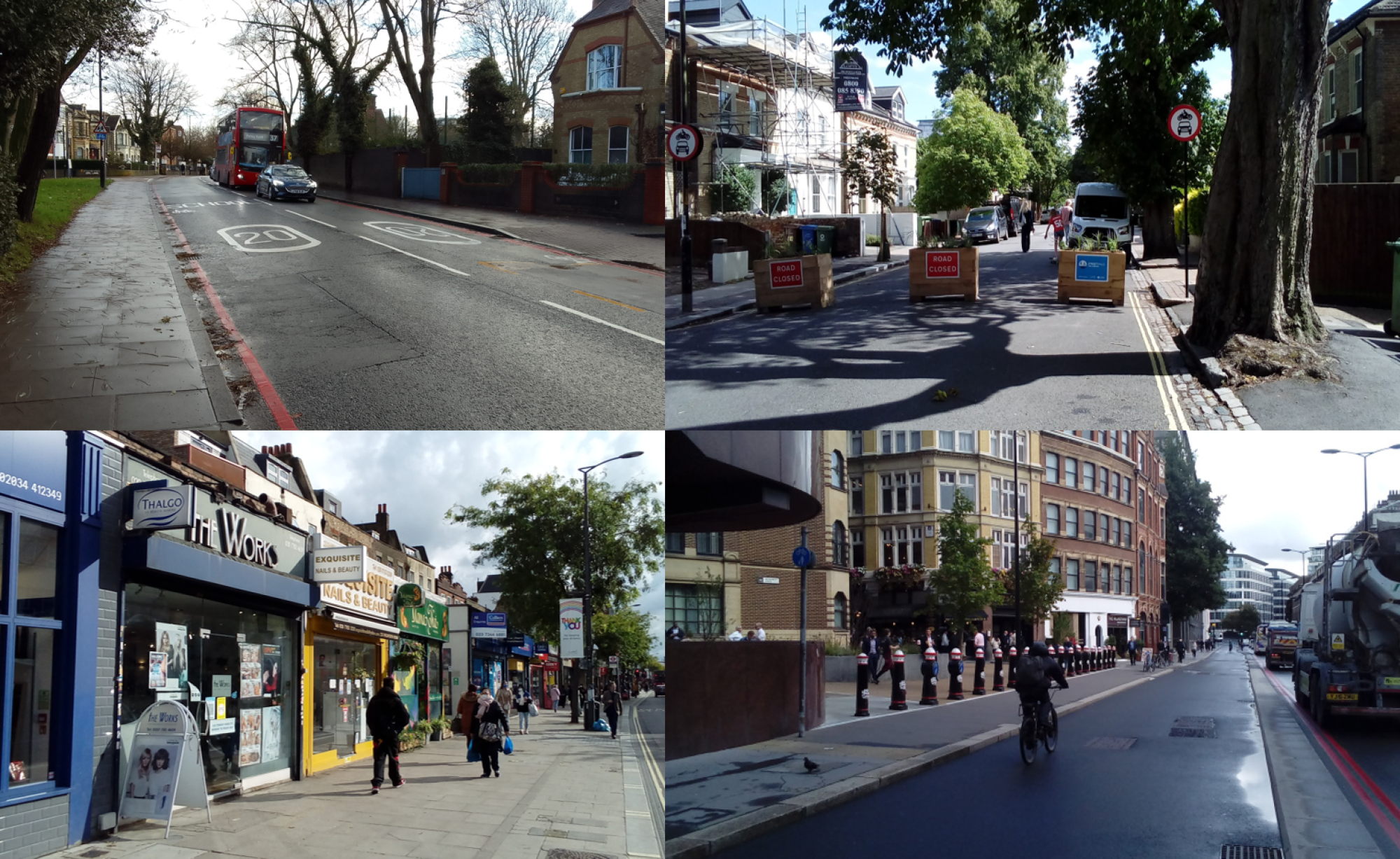
Since 2018 and both the adoption of the Mayor’s Transport Strategy and the launch of the original TfL Vision Zero Action Plan, London has been working towards a goal that by 2041 no one should be killed or seriously injured on the capital’s roads.
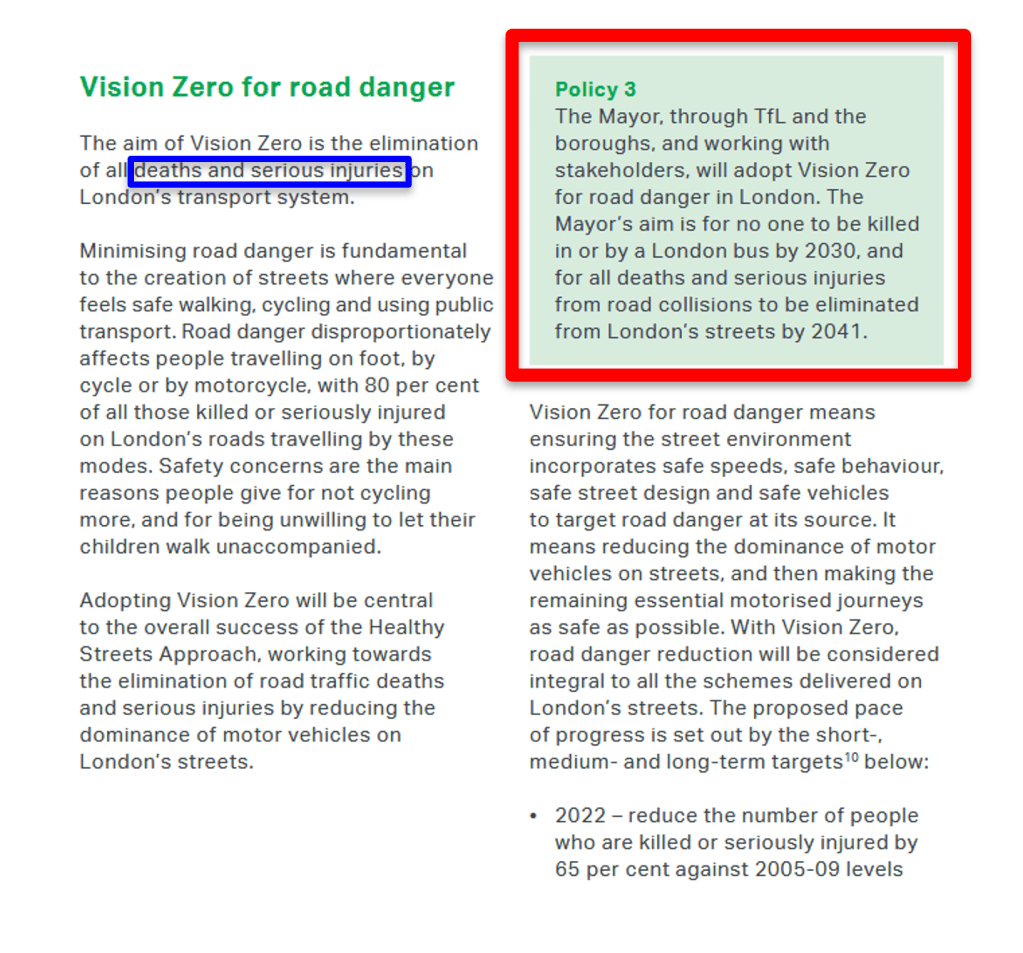
The plan is based on what is termed the Safe System – five core elements that tackled together should lead in time to a significant reduction in road casualties.
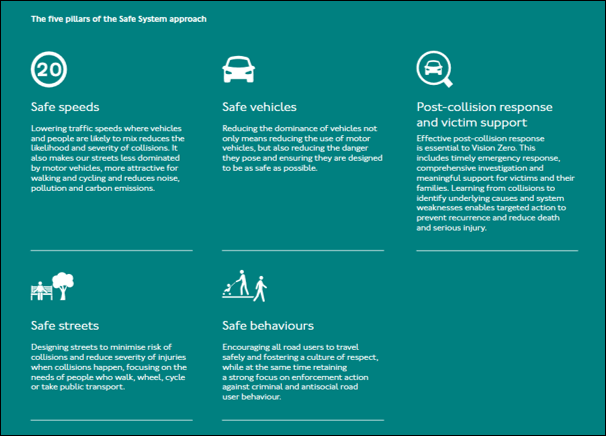
The Vision Zero Action Plan, launched in 2018 and updated with a Progress Report in 2021, was based on road danger reduction but despite the right intentions, the casualty reduction target for 2022 was only met for motor vehicle occupants. Overall as the chart below shows, serious and fatal casualties in London remain above target and a long way away from the targets for 2030, 2035 and 2041.
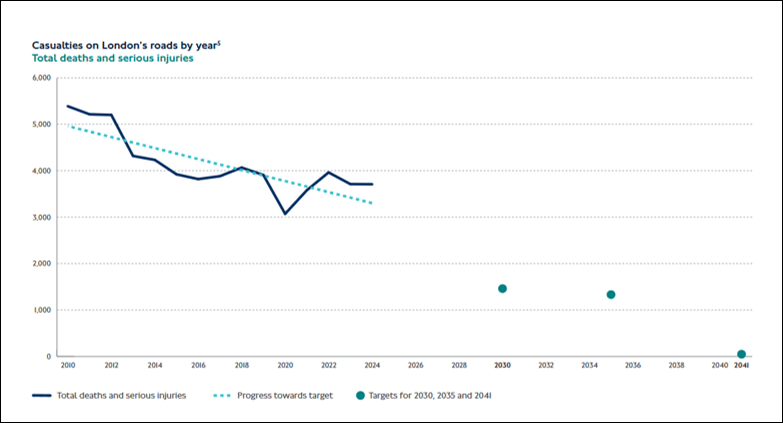
As a result of this struggle to achieve the reductions in casualties required, in March 2026, a revised plan – known as the Vision Zero Action Plan 2 (VZAP2) was launched by TfL.
This includes a total of 43 actions to be delivered in London along with a number of requests to the UK Government to support TfL and the Mayor’s aims to reduce road casualties towards zero.
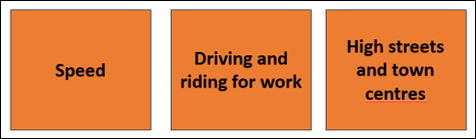
There were three new/strengthened areas of focus in the 2026 plan each of which were included owing to the high contribution that they make to the numbers of road casualties.
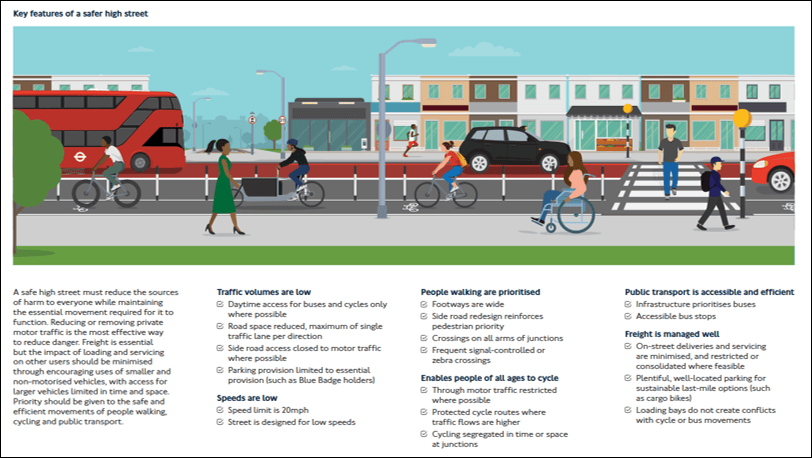
There is a strong section in VZAP2 as to what is needed to deliver safer high streets and town centres (page 60)
The obligation to deliver the strategy is shared amongst many groups including TfL, the Mayor of London, the emergency services (especially the Metropolitan Police) and the London boroughs who control (as Highway Authorities) 95% of London roads.
Danger on the TfL controlled arterial road network
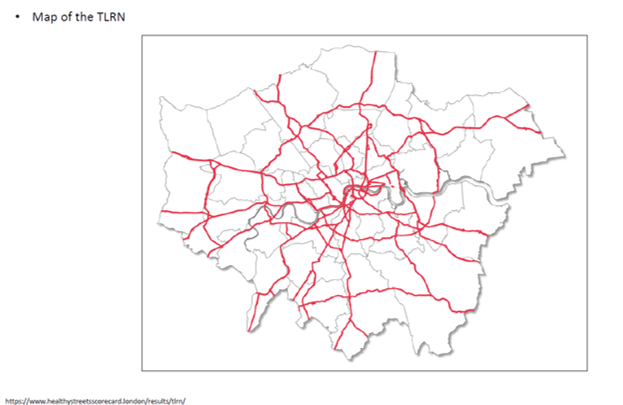
The other 5% of roads, however, are very important as they are made up of arterial roads and are controlled by TfL. This network is known as the Transport for London Road Network (TLRN) or more colloquially as the Red Routes. This network carries 30% of all London’s traffic but, in relation to Vision Zero, is where 37% of all road fatalities and 28% of all serious casualties occur.
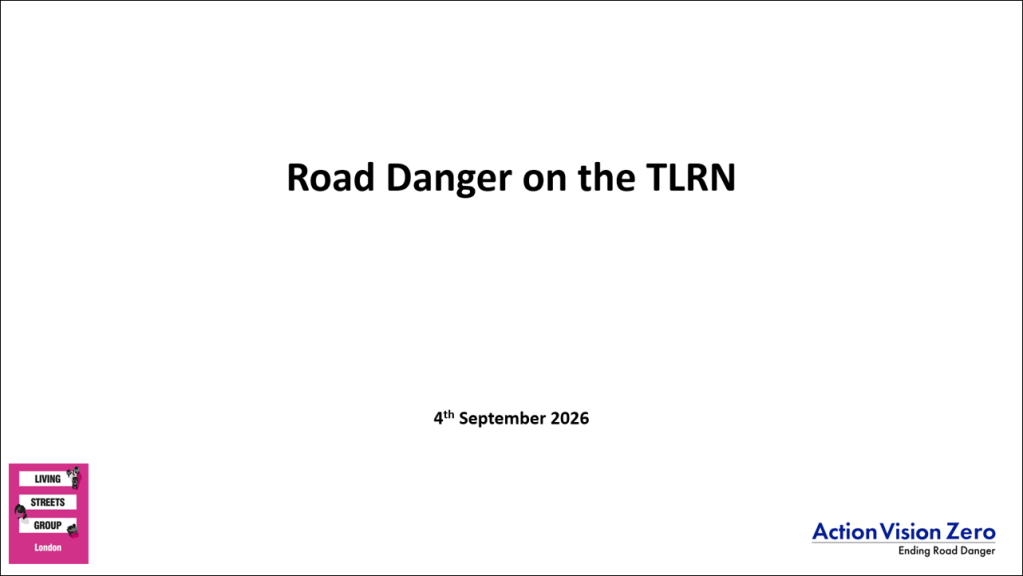
In conjunction with London Living Streets, we have worked to highlight the issue of casualties on the TLRN and propose how this can be tackled in a two reports in summer 2026.
Road danger on the TLRN – download our report (September 2026 here)
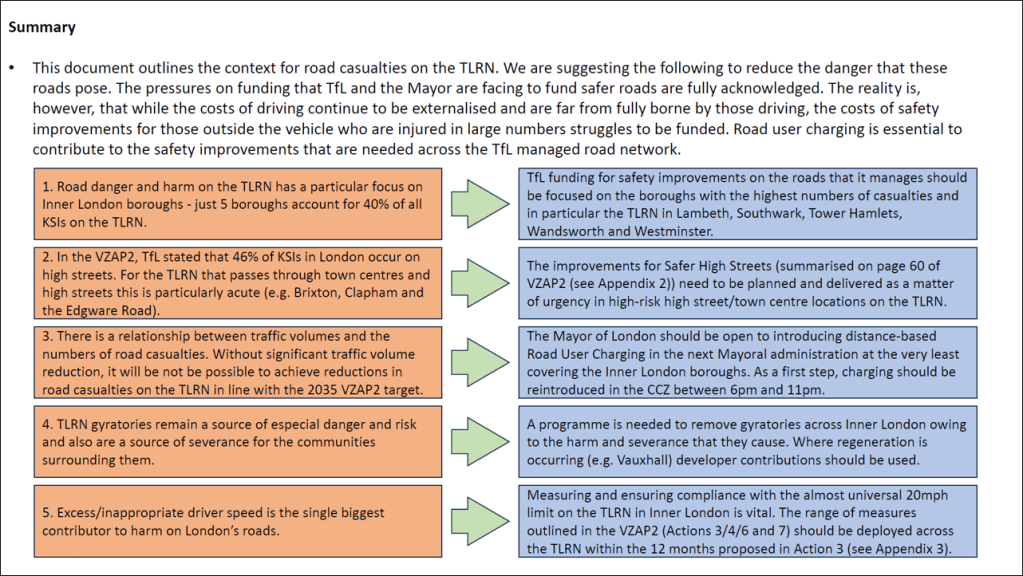
Our August 2026 Road Danger on the TLRN report that focuses just on TLRN in Lambeth and Southwark can be downloaded here
The Safe System PLUS Less Traffic
As well as the five core element of the Safe System, we feel that London is paying insufficient attention to the need to reduce traffic (see our Less Traffic section for why this is important). The plan stresses the need to reduce traffic and how it can contribute to reducing casualties but then, in the absence of a commitment to Road User Charging, relies on policies which are not widespread enough to have the impact needed to reduce traffic volumes significantly – School Streets (Action 14), timed traffic restriction (e.g. Evening Streets (Action 15)) and Low Traffic Neighbourhood initiatives (which are extremely effective in reducing road casualties but are not being taken up by many of the London boroughs).
There is no doubt that London’s Vision Zero policies are as good as those of any city in the world and the commitment to Vision Zero now runs deep in TfL BUT it is imperative that the actions in VZAP2 are delivered fully and that traffic reduction becomes a focus if London is to see the casualty reductions that the targets require.
Summary of the changes that is needed
- Speed remains too high with speeding a factor in half of road deaths in London
- Traffic reduction has not occurred to the extent expected or needed
- Cycling, which has increased greatly, remains low, with people too scared to cycle
Challenge
- Responsibility shared between TfL, the Met and the boroughs
- Competing demands on police with high profile concerns, including Violence Against Women and Girls and knife crime.
- Funding challenges persist
- Some still see collisions as accidents and inevitable part of life
What needs to change
- Reduced road danger
- Greater recognition that speeds must be reduced—not just for avoiding death but also sparing people from injury and intimidation,
- Greater priority given to the measures aimed at reducing harm posed to cyclists and walkers, with a focus on 20mph and 30 mph roads
- Through investigations so that injured cyclists and walkers receive fair compensation
- Bolder measures to reduce traffic, including with low traffic neighbourhoods and parking controls
- Increased transparency and accountability
- Road danger reduction related KPIs—Killed and Seriously Injured cannot be the only target—feeling safe is a key Healthy Streets indicator and should be adopted along with speed reduction targets. Another indicator should be how dangerous women think cycling is.
- Local engagement and collaboration
- More investment in reporting road crime
What AVZ is doing to help
- Identified key actions needed in our 2024 election manifesto
- Coordinate a monthly meeting online of local Vision Zero and road danger reduction campaigners
- Collate and analyse the data on casualties, enforcement and speeds and share
- Advocate for road danger reduction through the London Vision Zero Steering Group and the London Vision Zero Enforcement Reference Group
- Collaborate with active travel campaign groups, including on the Healthy Streets Scorecard
More information
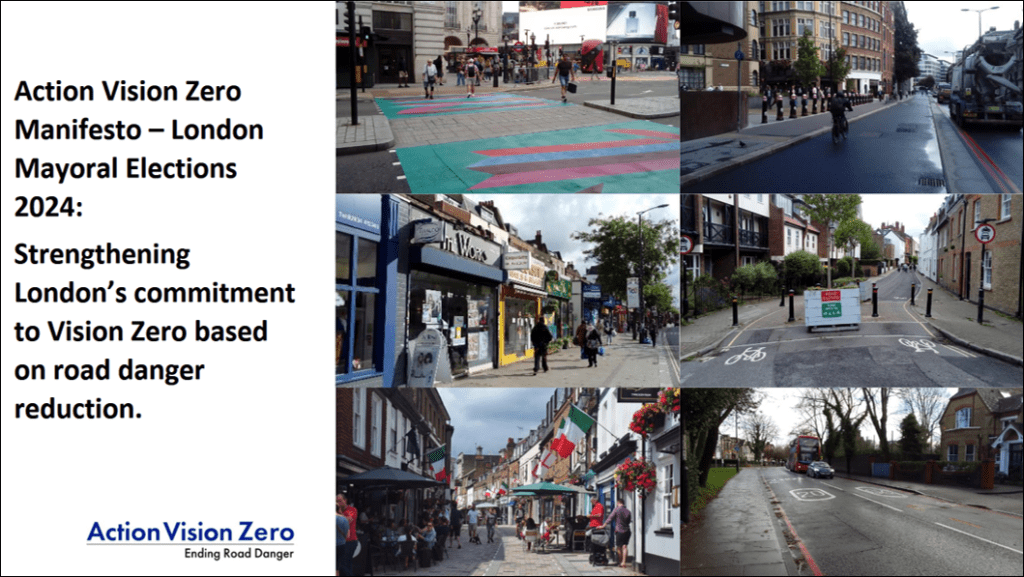
AVZ London Mayoral Elections 2024: Strengthening London’s commitment to Vision Zero (Feb 2024)
A London where no one is killed or seriously injured or too scared to cycle
AVZ briefing London reported road casualties 2023 (Jun 2024)
AVZ blog 20mph speed enforcement in London soars (Dec 2023)
AVZ summary TfL Cycling Action Plan 2 (Dec 2023)
AVZ blog London Vision Zero Enforcement dashboard (Apr 2023)
AVZ London reported road casualty database (2005-2022) (Oct 2023)
AVZ blog Speed limiters in action: Findings from London and NYC (Feb 2023)
London Healthy Streets Scorecard
TfL publications
London Vision Zero Action Plan (2018)
London Vision Zero Action Plan Progress Report (2021)
London Vision Zero Action Plan 2 (2026)
TfL Cycling Action Plan 2 (2023)

