22nd February 2024
To download this briefing as a pdf click here
Key points
- The UK government is legislating to suspend custodial sentences of 12 months and under, except for exceptional circumstances, e.g. risk of physical harm.
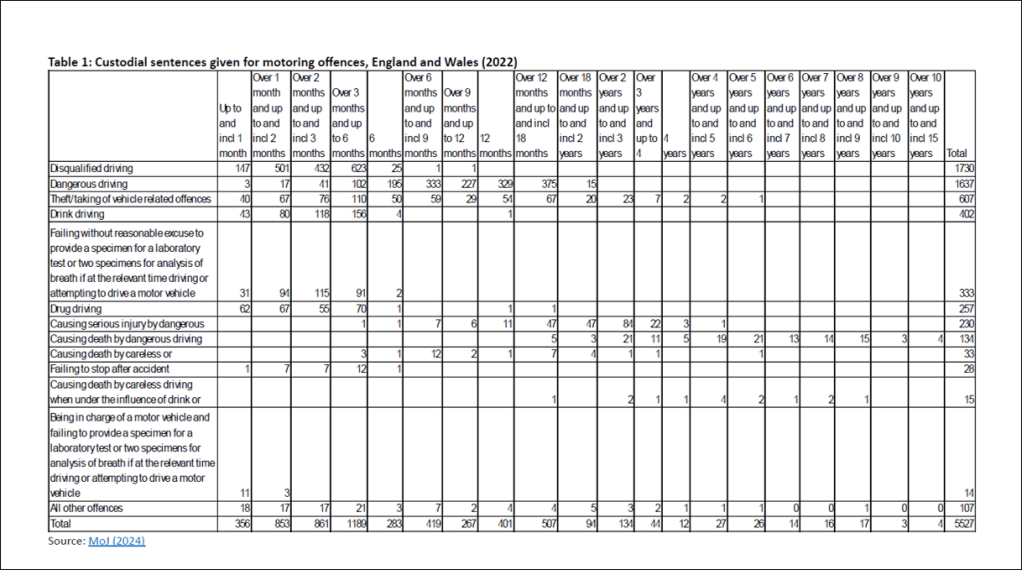
- Whilst very few motoring offences (less than 1%) involve a custodial sentence, 84% are for 12 months and under.
- With motoring offences, this change will affect:
- 1. The summary offences that have a maximum custodial sentence of six months, i.e. drink/drug driving, fail to stop, disqualified driving.
- 2. Dangerous driving, as whilst it has a maximum custodial sentence of two years, over three quarters of the custodial sentences given are for 12 months or less (76%).
- AVZ welcomes the government responding to the evidence which shows custodial sentences have a higher reoffending rate and so are counter-productive. This adds to the case for much greater use of disqualification.
Short sentences
In 2023, the government announced its intention to legislate against the presumption of custodial sentences for 12 months or less. In the Sentencing Bill, “the Government is to legislate to introduce a duty on the courts to suspend short sentences of 12 months’ custody or less”.
Why?
In their Sentencing Bil Factsheet: Short Sentences, the government has stated that:
- Our statistics show the shorter the prison sentence the more likely someone will go on to reoffend.
- More than half of offenders serving a sentence of less than 12 months go on to commit another crime. For those serving a sentence of six months or less it is 58%. Meanwhile, for offenders punished with Suspended Sentence Orders with requirements that are served in the community, the reoffending rate is 24%.
- The facts are clear – short prison sentences leave offenders stuck in a revolving door of re-offending.
Impact on motoring offences
Very few motoring offences result in a custodial sentence (see Table 1). Fewer than one percent of those convicted at court for a motoring offence go to prison. But this policy change will affect the vast majority of them. Of the custodial sentences given for motoring offences, 84% were for 12 months or under in 2022.
Summary offences carry a maximum custodial sentence of six months. These include:
- Disqualified driving
- Drink/drug driving
- Fail to stop.
Disqualified driving accounted for 31% of custodial sentences given for motoring offences in 2022, whilst drink/drug driving related offences accounted for 18%. Fail to stop offences made up one half of a percent of custodial sentences for motoring offences.
Speeding, which accounts for more motoring offence court convictions than any other offence (35% total), does not have any custodial sentence possible.
Dangerous driving
Dangerous driving is the only motoring offence which accounts for many custodial sentences (30% total) and carries a longer maximum custodial sentence (two years).
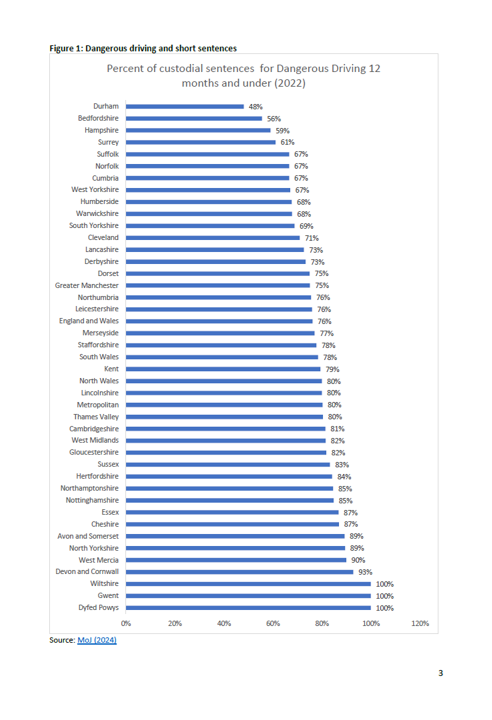
But even with dangerous driving, over three out of four sentences are for 12 months or under (76%). So, this policy change has substantial implications for sentencing of dangerous driving as well.
See Figure 1 to see the share of dangerous driving custodial sentences for 12 months or under by magistrate area. In three areas (Wiltshire, Dyfed-Powys and Gwent) it is 100% whilst only in Durham is it less than half (48%).
Table 2 shows the custodial sentence lengths given for dangerous driving by court area, with only 15 sentences given for the longest sentence possible, i.e. over 18 months-two years.
AVZ conclusion
This policy change is supported. Prison is costly and ineffective in terms of deterring re-offending. AVZ, along with many others, including Cycling UK, argued for the sentencing guidelines for Dangerous Driving to be widened with greater use of non-custodial sentences.
This shift should also strengthen the case for much greater use of disqualifications and for longer durations as well. But more will also be required from other non-custodial punishments, such as community sentences, to ensure the harm caused by dangerous and drink/drug drivers is sanctioned properly.
Figure 1: Dangerous driving and short sentences

 actionvisionzero.org
One Reply to “”