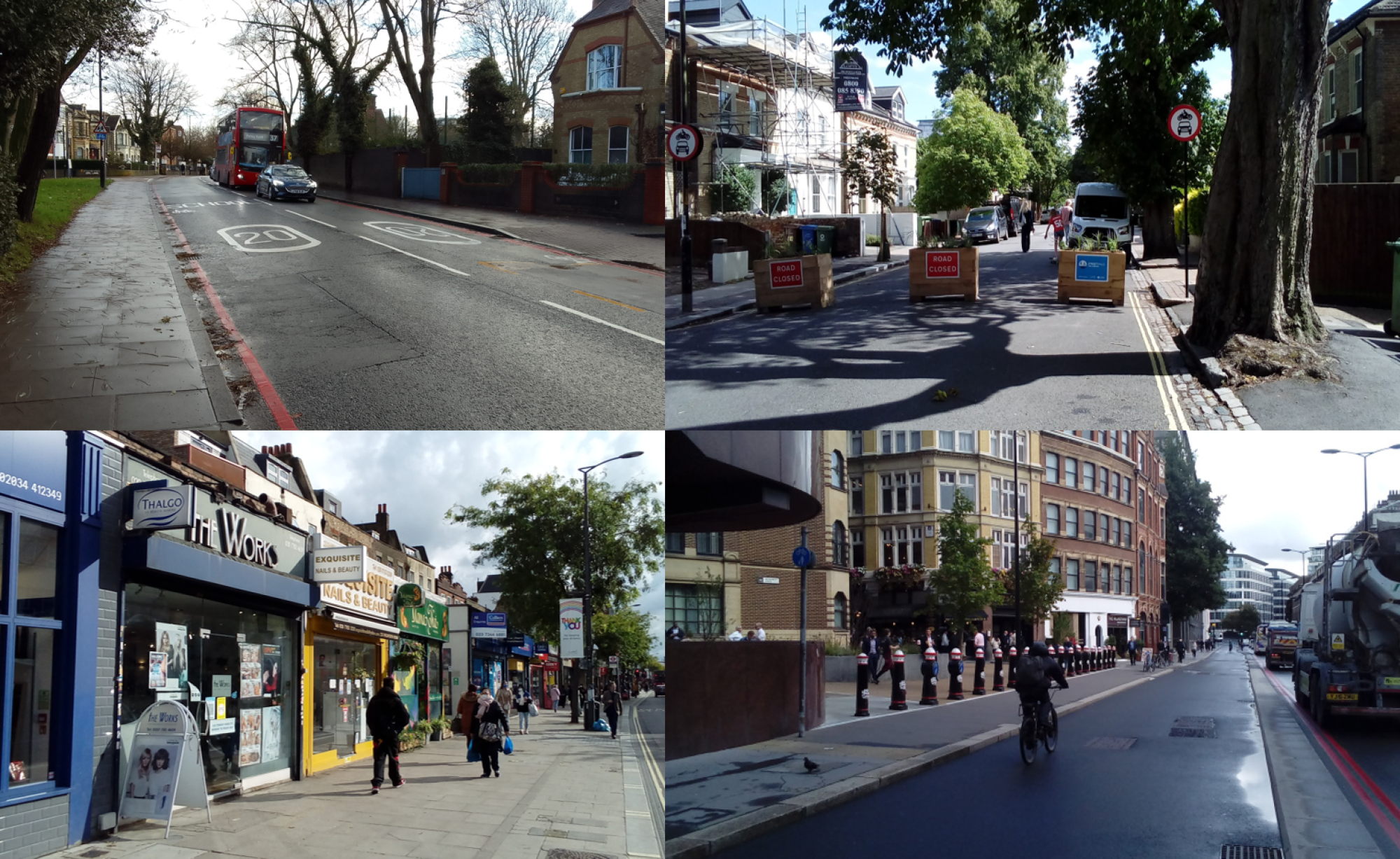
- Reducing traffic volumes is emerging as an important factor in delivering Vision Zero. Across the globe, the recent COVID-19 pandemic illustrated how reducing traffic can be linked to reduced road casualties.
- Much of the background to this comes from research by Todd Litman at the Victoria Transport Policy Institute[1].
- His work reveals that exposure, in terms of total vehicle travel, is a risk factor to those both inside and outside the vehicles but that reductions in levels of driving can support reductions in the numbers of road casualties.
- Examples of this on a city-wide basis include:
1. London Congestion Charge. University of Lancaster in 2015 found that the London Congestion Charge resulted in “meaningful” reductions of traffic volumes and “substantial” and “significant” reductions in accidents and fatalities.
- 2. New York City Congestion Pricing. These are early days but the New York City Congestion Pricing scheme ($9 peak toll to drive into Manhattan below 59th Street) is seeing 12-16% fewer vehicles entering the zone on a typical day[2]. Crashes with injuries are down 14% year-on-year (5th Jan to 30th March period in 2024 vs 2025)[3].

- 3. London – Covid-19 pandemic. The impact of the pandemic on levels of levels of driving saw a correlation with reductions in casualties in the city.

- At a more local neighbourhood level, the research into Low Traffic Neighbourhoods also shows the significance of reducing/removing motor traffic on the numbers of casualties:
- 1. (January 2021) Injury numbers in the LTNs in the London borough of Waltham Forest fell three-fold in the post-implementation period relative to the pre-period[4].
- 2. (July 2021) The LTNs that were installed in London in the pandemic were associated with an “approximately 70% reduction in absolute injury numbers and also approximately a 70% reduction in risk per trip for walking, cycling and car travel alike. There was no evidence of a change in injuries on LTN boundary roads”[5].
- 3. (July 2025) LTNs in Greater London introduced between 2015 and 2014 were linked to 35% decrease in all injuries and a 37% decrease in people Killed or Seriously Injured (KSI). On boundary roads, there was no evidence of a change in total injury numbers KSI injury numbers[6].
- On its own, the Safe System[7] (Safe speeds, safe road users, safe roads and roadsides, safe vehicles and the post-crash response) which underpins many cities’ Vision Zero plans struggles to obtain the required reductions in casualties. Vision Zero also needs to incorporate traffic volume reduction as one of its core elements.
[1] https://www.vtpi.org/ntsp.pdf
[2] https://enotrans.org/article/has-new-yorks-congestion-pricing-reduced-congestion/
[3] https://nyc.streetsblog.org/2025/04/08/tuesdays-headlines-congestion-pricing-is-working-again-edition
[4] https://findingspress.org/article/18330-the-impact-of-introducing-low-traffic-neighbourhoods-on-road-traffic-injurie
[5] https://findingspress.org/article/25633-impacts-of-2020-low-traffic-neighbourhoods-in-london-on-road-traffic-injuries
[6] https://injuryprevention.bmj.com/content/early/2025/07/06/ip-2024-045571
 actionvisionzero.org