20 Feb 2026
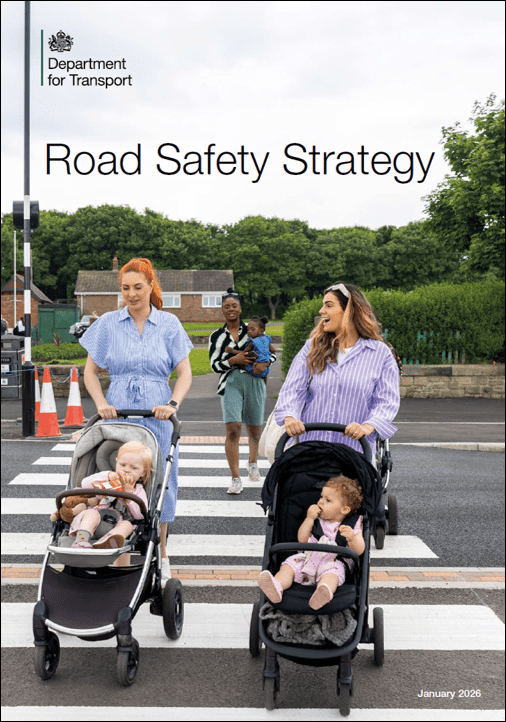
The Department for Transport (DfT’s) new Road Safety Strategy aims to reduce the number of people killed and seriously injured (KSIs) by 65% and child KSIs by 70% by 2035, compared to a 2022-24 baseline. No road user modes are prioritised – at least not in the targets. AVZ has already expressed concern that the strategy is more aimed at protecting occupants of motor vehicles than people on the outside.
This is the opposite of what road danger reduction advocates, like AVZ, wish to see. We campaign for priority to be given to reducing harm posed to those who pose the least harm themselves, i.e. people walking, wheeling and cycling. This is for health and environmental reasons as well as justice concerns; at present active road users facing a hugely disproportionate risk of being injured or killed (almost always by drivers of motor vehicles).
And the new Strategy has the theme Robust Enforcement to protect all road users. But different offences can affect different road user groups. AVZ is producing a series of briefings entitled Who’s getting hurt which highlight how active road users are harmed differently from motor vehicle occupants.
See our briefing on drink drive crashes and who is getting harmed in these.
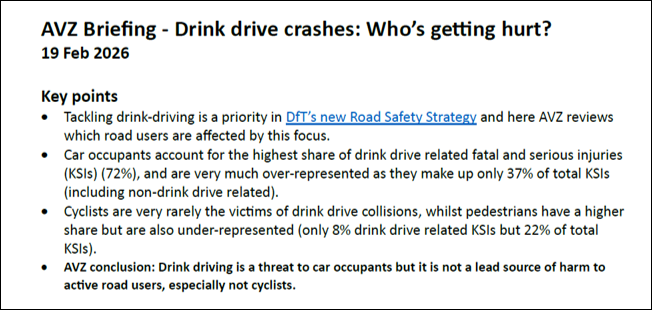
Drink and drug driving is a priority for the strategy yet the DfT’s own analysis shows the most likely casualty in a drink drive related crash is a motor vehicle occupant, including the drink driver themself. Few pedestrians and far fewer cyclist KSIs were reported by DfT to be drink drive related.
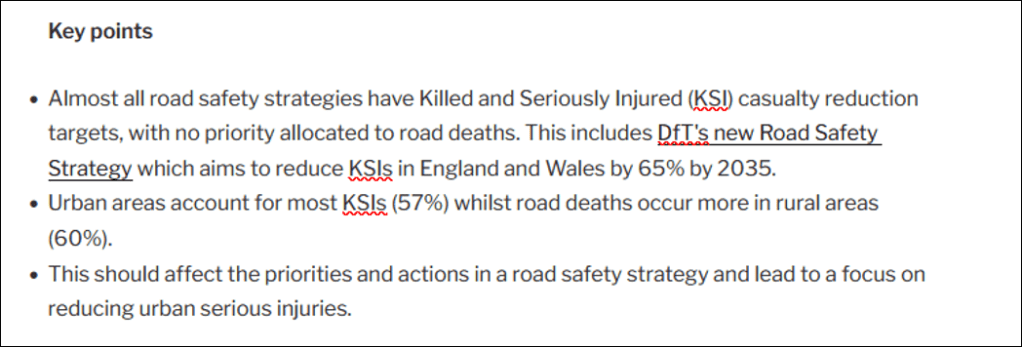
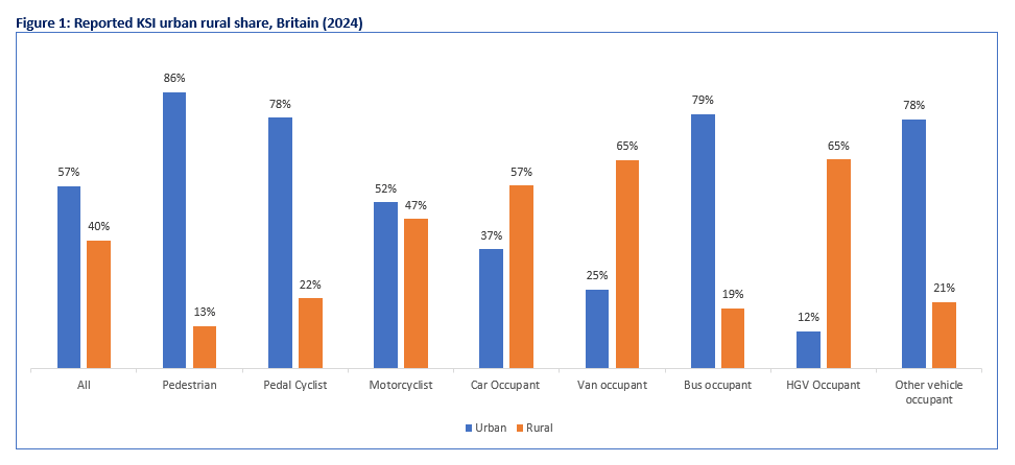
Our Who’s getting hurt series has highlighted the differences between the modes of travel who are killed and seriously injured (KSI) in urban and rural areas with people walking, wheeling and cycling far more likely to be seriously injured in urban areas.
The series will go on to look at:
- Who is harmed in crashes where drivers fail to stop as well as
- Which speed limit roads do KSIs occur on, compared with where speed enforcement occurs.
- Another analysis will show the inequity of risk with who is seriously injured in collisions.
Much has been made of the connection between transport and public health. AVZ argues that too little consideration has been given to the role of justice. Shouldn’t our justice system and the limited resources in enforcement focus on reducing harm posed to others – especially those using the road who are more vulnerable? Read our series on Who’s getting hurt to be reminded of who benefits from which road safety measures and how all too often, it is not those walking and cycling.
 actionvisionzero.org